
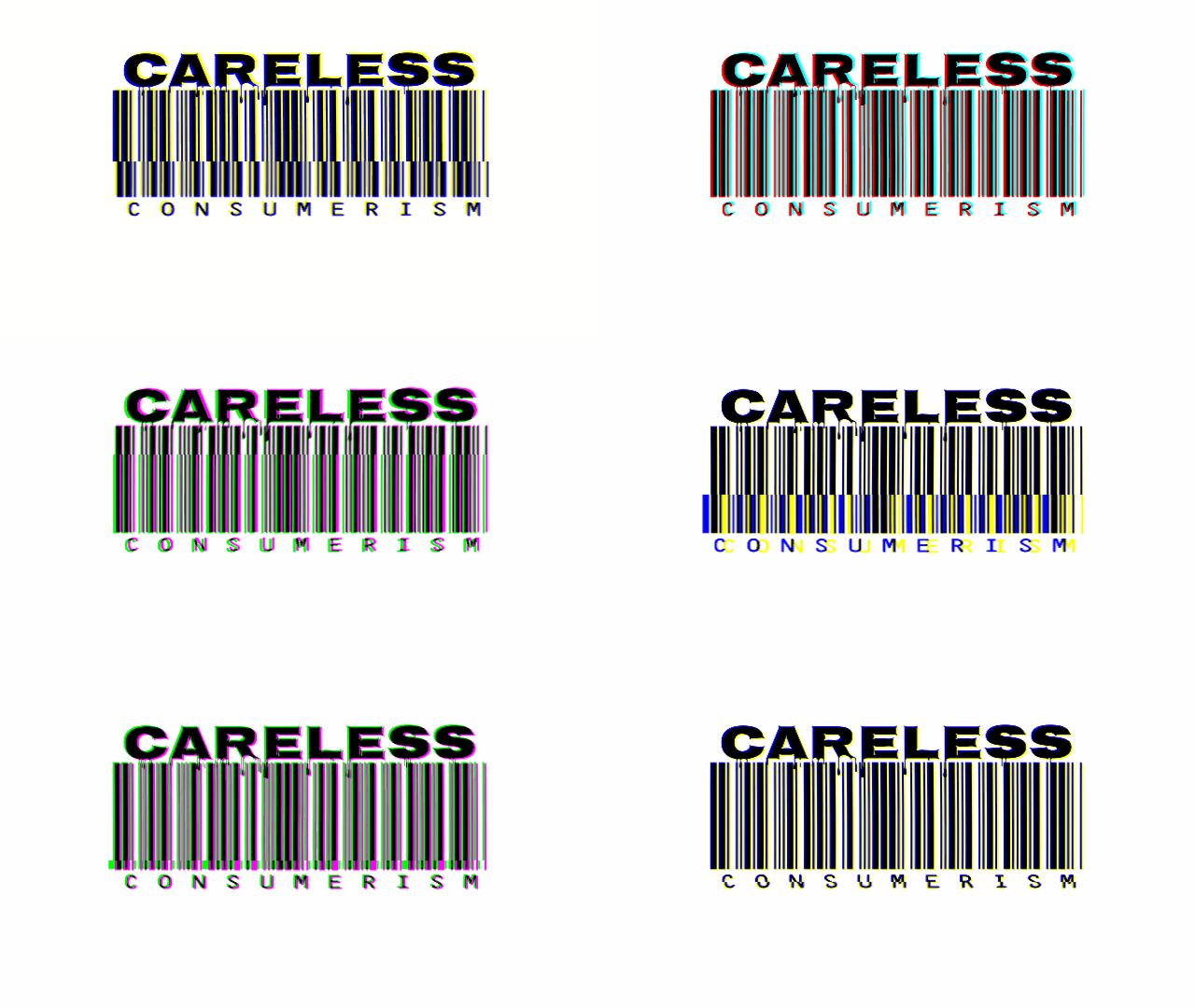
BY 2030, ALMOST 90% OF THE WORLD'S POPULATION WILL BELONG TO THE CONSUMER CLASS
consumer class
[con-sum-er] noun
The group of people which is devoted to a lifestyle that centres around the accumulation of unnecessary goods
synonyms: over-purchaser, careless buyer, mindless shopper


Modern Day Consumption
A desire for bigger houses, expensive cars and luxury lifestyles has lead to humans becoming greedy and over consuming non-essential goods and services. The belief that a happier, more fulfilled life is only possible through consumption has become the collective mentality of humans. Despite a rise in mental health issues and extremely high levels of debt, humans continue to carelessly obtain material possessions to better their quality of life. Consumers over-purchase goods with no concern over environmental impact and how their shopping habits are affecting the planet's future.

Consumerism
Lauryn Hill
Superscript
ck title
our own custom content


The Effects of Careless Consumerism

Environmental Degradation

Consumer Shopping Habits
Consumer Exploitation


The Power of Advertising
The average consumer in Britain is exposed to over 5,000 advertisements per day.
(75 media)
Advertising is driving consumer habits as it manipulates viewers into believing they need to buy what is being sold in order to be satisfied. Consumers are obsessed with obtaining everything they see where it's not necessary as they believe it will better their lives and solve all their problems.
The Future of Advertising Has Already Begun
Whilst current advertisements appear as though they are personalised, they are still widely generalised to a specific audience of people. However, this is changing as we speak. Artificial Intelligence is being used to gather people's data and gain access to their shopping habits, ensuring the information displayed will be more personalised and relevant to each individual consumer.


Consumption Comes At a Cost
Financial and emotional insecurities have led people to believe that leading a materialistic lifestyle is the only way to become satisfied. People are now living beyond their means and constantly craving new products to better their quality of life. However, living a high-consumption lifestyle means people are now incurring higher levels of debt, maxing out credit cards they cannot pay back and buying goods on finance. This means they have to work longer hours to pay for a lifestyle they cannot remove themselves from.

The normalisation that high earnings and owning many goods indicates a person’s success has resulted in the deterioration of people’s mental health. It is rooted in society that the accumulation of more cars, jewellery, clothes and mobile phones will lead to contentment, as opposed to spending time with friends, exercising and finding new hobbies. Consuming more goods than necessary is only a temporary solution to happiness, and a lifestyle which centres around materialism can instead lead to dissatisfaction in the long term, as well as the suffering from mental health issues such as anxiety and depression.
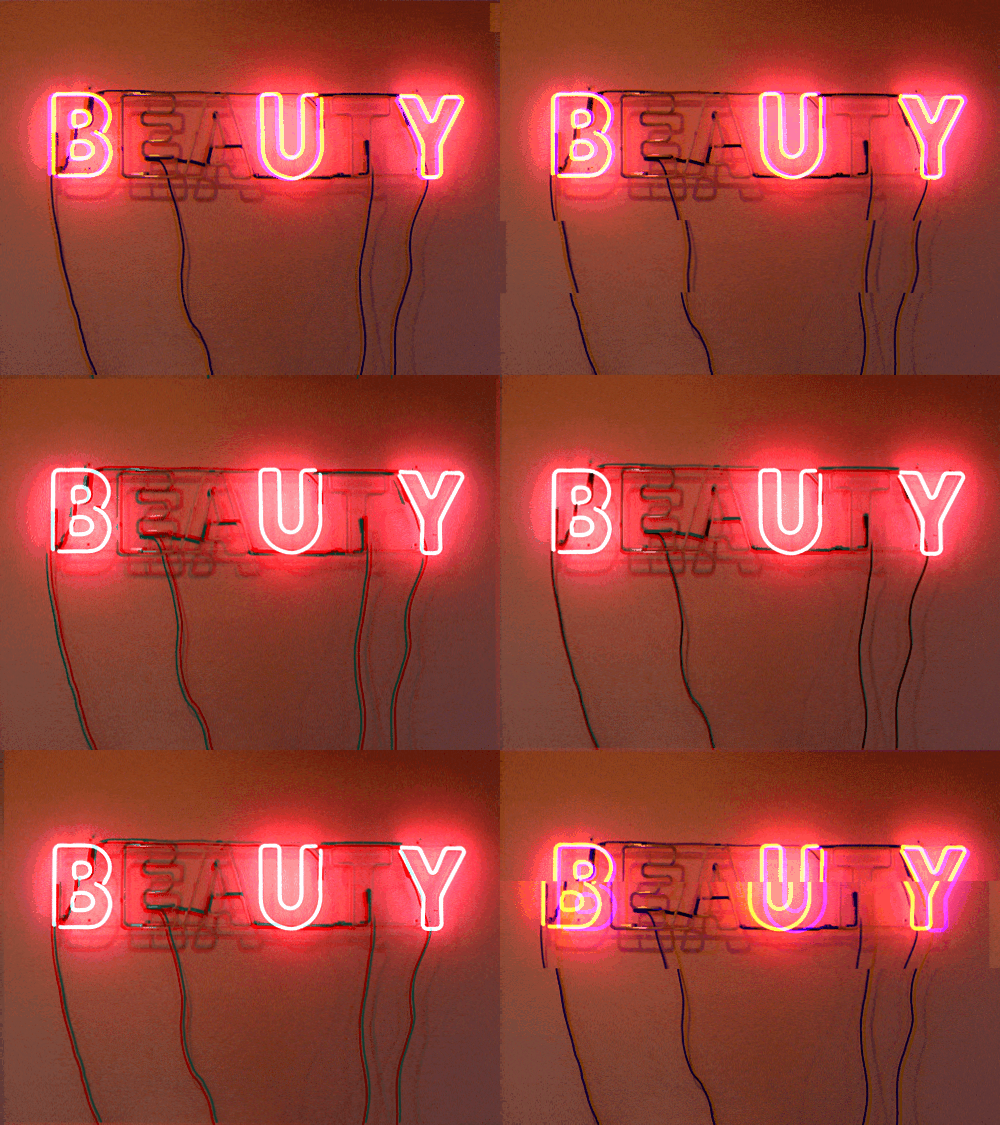

WHO ARE YOU?
In consumer culture, a person’s identity is constructed by the things they purchase. However, due to social media and other influences, people are conforming to influencer behaviours and styles in order to feel acceptance from society. This has resulted in a lack of originality and a loss of identity for consumers.
'Postmodern consumers can never be fulfilled because the products they consume are only “sham objects, or characteristic signs of happiness” and do not have any real power to bestow happiness to the possessor' (Malapas 122)
IF EVERYONE BUYS THE SAME THINGS THEN WHAT'S STOPPING THEM FROM ALL LOOKING THE SAME?
I DON'T KNOW
In a post-modern society, we are constantly exposed to images and messages of global consumerism, which effectively create a simulated reality which we are subconsciously a part of. The persistent exposure means we are constantly thinking about what we’ve just seen and how it would better our lives. Due to this, we are constantly recreating our own identities and are never truly ourselves because we thrive to be like the person we have just seen. This explains why people with a high consumption lifestyle are never truly happy, because they are pretending to be someone else who is aspirational to others and they believe this is the only way to be accepted in society.
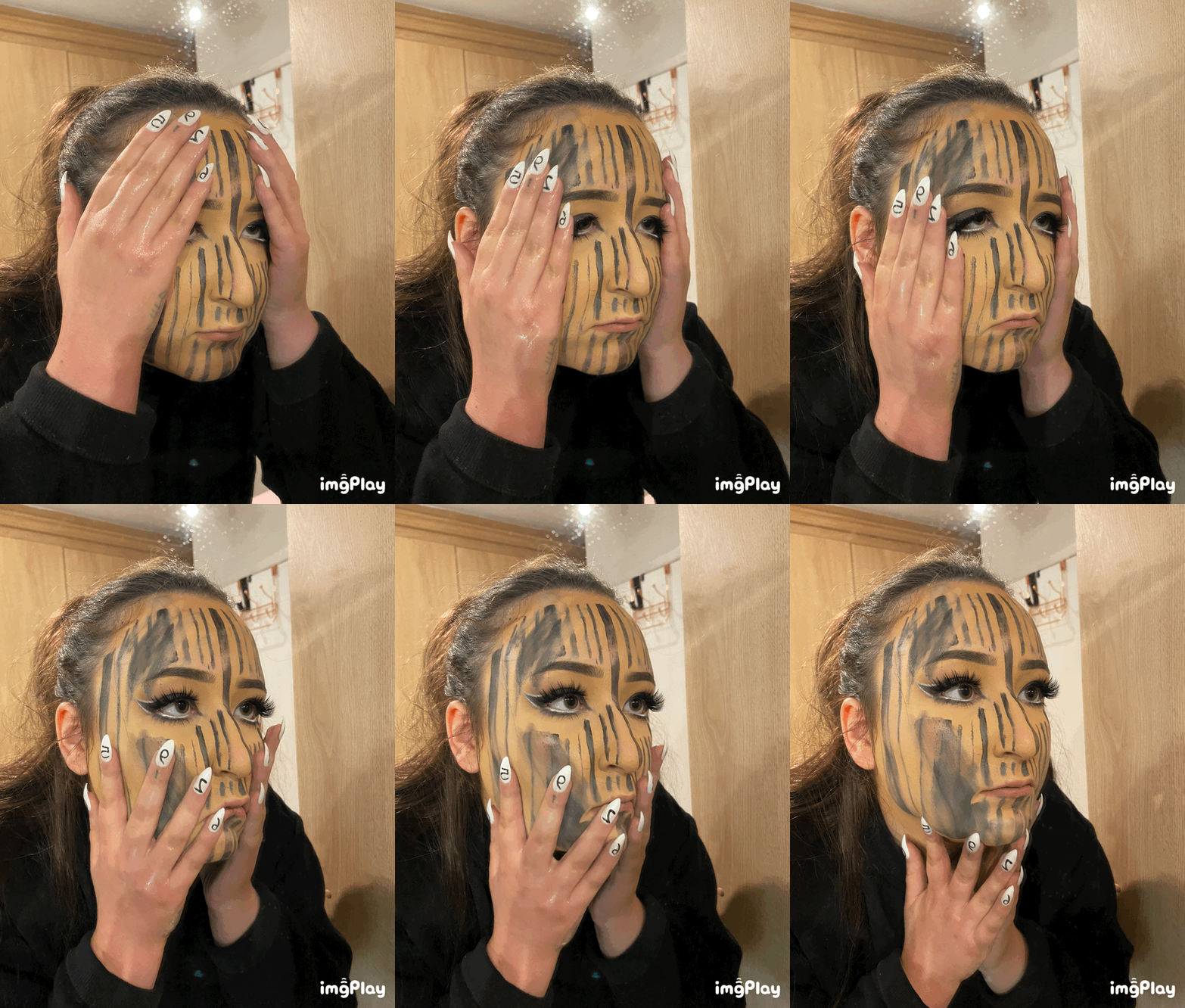
Becoming a Better You to Impress Everyone Else
Beauty and fashion magazines often promote ways for the reader to create a new and improved version of themselves. Each page, whether it’s an advertisement or an article, offers a more desirable lifestyle as well as a way to attain it. Magazines encourage the consumption of goods and force the belief that consumers will be better off if they comply with societal standards.


Living Beyond Our Limits
Due to a rapid growth in consumption, population and urbanisation, humans have used more of the Earth’s resources than can be replenished naturally. We are now essentially 'borrowing' natural resources from future generations in order to meet the needs of the consumer culture.
As the world population is set to reach 9 billion by 2050, food production must increase by 70%. This means energy use, pollution and deforestation as a result of production will also increase, affecting the future of the planet and its wildlife.
Appearance is Everything
Food that is not aesthetically pleasing is not acceptable in the eyes of the consumer as it’s deemed to be of a bad quality. Supermarkets and shops refuse to sell food which is odd-looking, despite it being perfectly edible. Many fruits and vegetables are disposed of due to not being the right shape, size or ripeness. Instead of selling produce that doesn’t look right, even for a lower price, retailers dispose of it.
One third of the food which is produced for human consumption is wasted or lost annually
Households account for 70% of food waste per year and 60 – 80% of environmental damage comes from household consumption. People continue to buy excess food to feed their gluttonous eating habits, not considering the amount of greenhouse gases created as a result of their goods being thrown away carelessly.
By 2050 there will be more plastic than fish in the world’s oceans
Almost 12 million tonnes of plastic is entering the oceans each year due to plastic production in food, fashion and other industries.
By 2040, this figure is set to increase to 29 million tonnes. With the inclusion of microplastics the figure will reach 600 million tonnes by this time. Plastic is either washed or deliberately dumped into the sea, along with oil and toxic chemicals, with no regard for marine life or the Co2 that is produced in contributing to climate change.
91% of all plastic that has been produced has not yet been recycled and it takes a staggering 400 years for it to decompose. It is therefore entering rivers and oceans and affecting wildlife. Plastics such as bottles and balloons are ingested by marine animals such as turtles and dolphins, and it’s been found to be affecting at least 267 different species.
‘Even if we allow ambitious increases in recycling and collection and substitution of materials, we still cannot get there unless we freeze plastic production at 2020 levels, Either refineries have to change their plans, or we have to acknowledge there is no way to get out of increased ocean pollution’

FORESTS WILL CEASE TO EXIST IN LESS THAN 100 YEARS
Deforestation is the main cause of extinction on the planet as it removes forest habitats, leading to the loss of many wild species of animals and plants.
Every minute forests and rainforests the size of 20 football fields are cut down, mainly for agricultural purposes and infrastructure. By the year 2030 we will have less than 10% of forests left, which will create added greenhouse gases in the atmosphere and consequently affect global warming.

NO TURNING BACK
What does the world look like in 2100?
Global warming cannot be limited to 1.5 degrees by 2040, it will in turn be more than 3 degrees warmer by 2100.
The world’s ecosystems have been destroyed by humans and there are now no trees to absorb the carbon dioxide that people have excessively produced. Oceans are so polluted that they are now emitting greenhouse gases instead of absorbing them. What was left of forests has been eliminated by wildfires caused by a global temperature increase and greenhouse gases and air pollution is at an all-time high.
2 billion people once lived in parts Africa and Australia, which are the hottest parts of the world. They are now inhabitable as a result of climate change and pollution.
Droughts, wildfires, floods and hurricanes are now a daily occurrence around the world, killing thousands of people every day, but the people who remain still continue to over consume goods that contribute to the creation of these deadly devastations.

THE EARTH
WILL NO
LONGER EXIST,
BUT BE A
DISTANT MEMORY


FAST FASHION IS A MAJOR THREAT OF GLOBAL ANNIHILATION


Fast fashion has caused consumers to:
Dislike clothes which are no longer in trend as they change weekly
Incessantly buy new clothes even when they’re not needed
Buy clothes made of cheap materials in inhumane conditions where workers are paid next to nothing, and don't have adequate clothes themselves
Not be environmentally conscious when shopping
Purchase clothes because they're cheap and throw them away after a couple of wears
Post their purchases online, influencing many others to also buy them
'Panic buy' on sale items such as on Black Friday where clothing and accessories can be found for less than £1

A Material World
The fashion industry is the second largest polluter in the world, accounting for 10% of global carbon emissions.
Click the button below to unfold more facts about the impact of the fashion industry

FAST FASHION FRAUD
IT TAKES 700 GALLONS OF WATER TO PRODUCE ONE COTTON T-SHIRT AND 2000 GALLONS TO PRODUCE A PAIR OF JEANS. NOT FORGETTING THE WORKERS WHO ARE PAID LESS THAN DAILY WAGE TO PRODUCE HUNDREDS OF GARMENTS A DAY, TO BE SOLD FOR LESS THAN £1!

The Future is a Land of Possibility
Fashion trends are changing daily, from the garments worn to the way they're advertised. The Covid-19 pandemic meant fashion had to be displayed digitally in an innovative way, which has in turn shaped the future for fashion shows and the catwalk.
'We will see digital collections and garments free from physical and creative restrictions become part of the fashion landscape'
Ted Talks
How Data is Driving the Future of Fashion
A dressing room where you don't have to choose your own clothes. Who wouldn't want that?
FASHION WILL BE INNOVATIVE,
FASHION WILL BE EXTRAORDINARY,
FASHION WILL BE DESIGNED BY THE CONSUMER,
FASHION WILL BE DESIGNED BY YOU.

Secondary Images Referenced in Order
Perspektif Magazine, Jason Hendriks
Consumerism v Climate Change, John Holcroft
The Consume Series, Hal Hefner
Beauty Magazine, themittenkittenblog